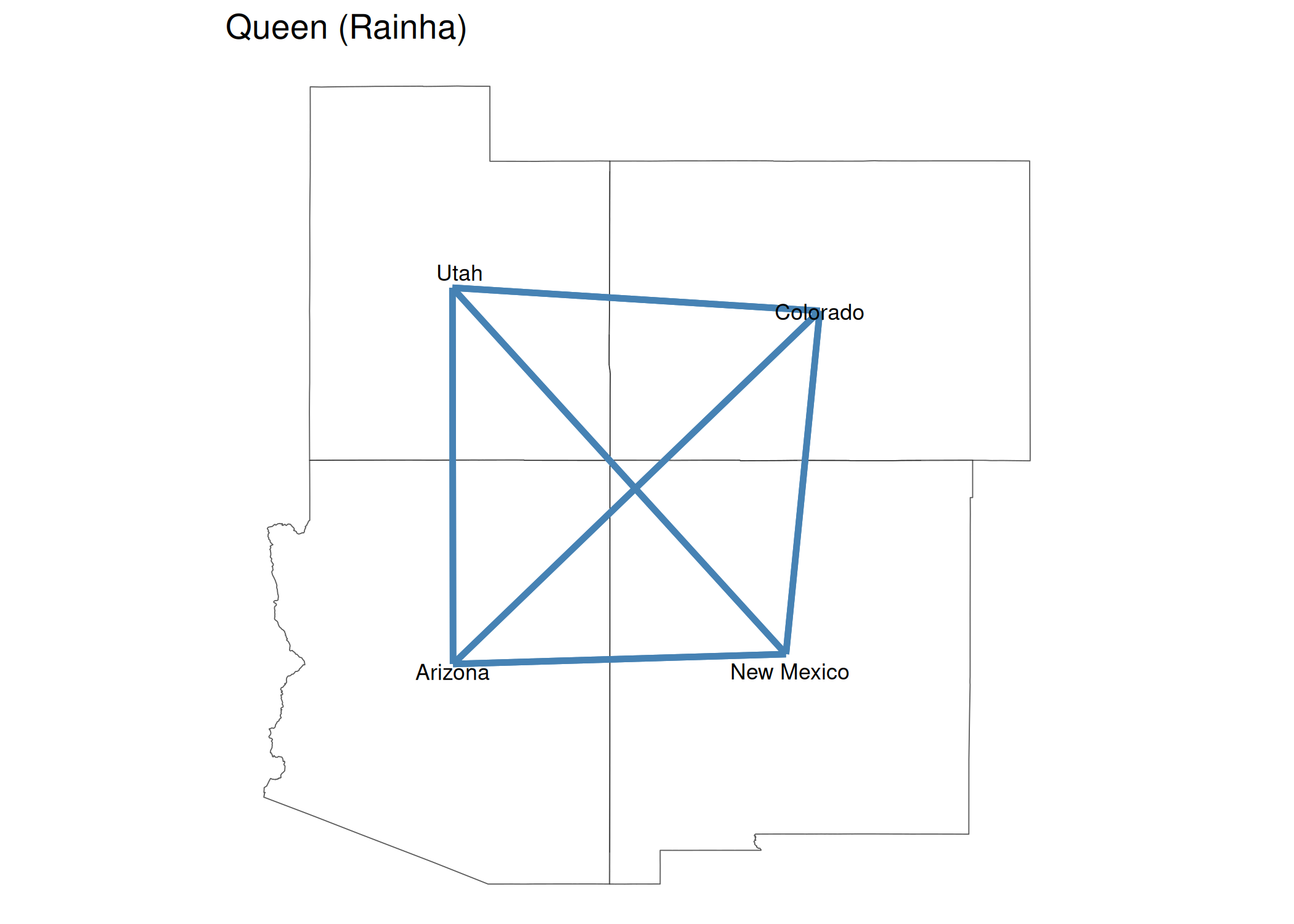
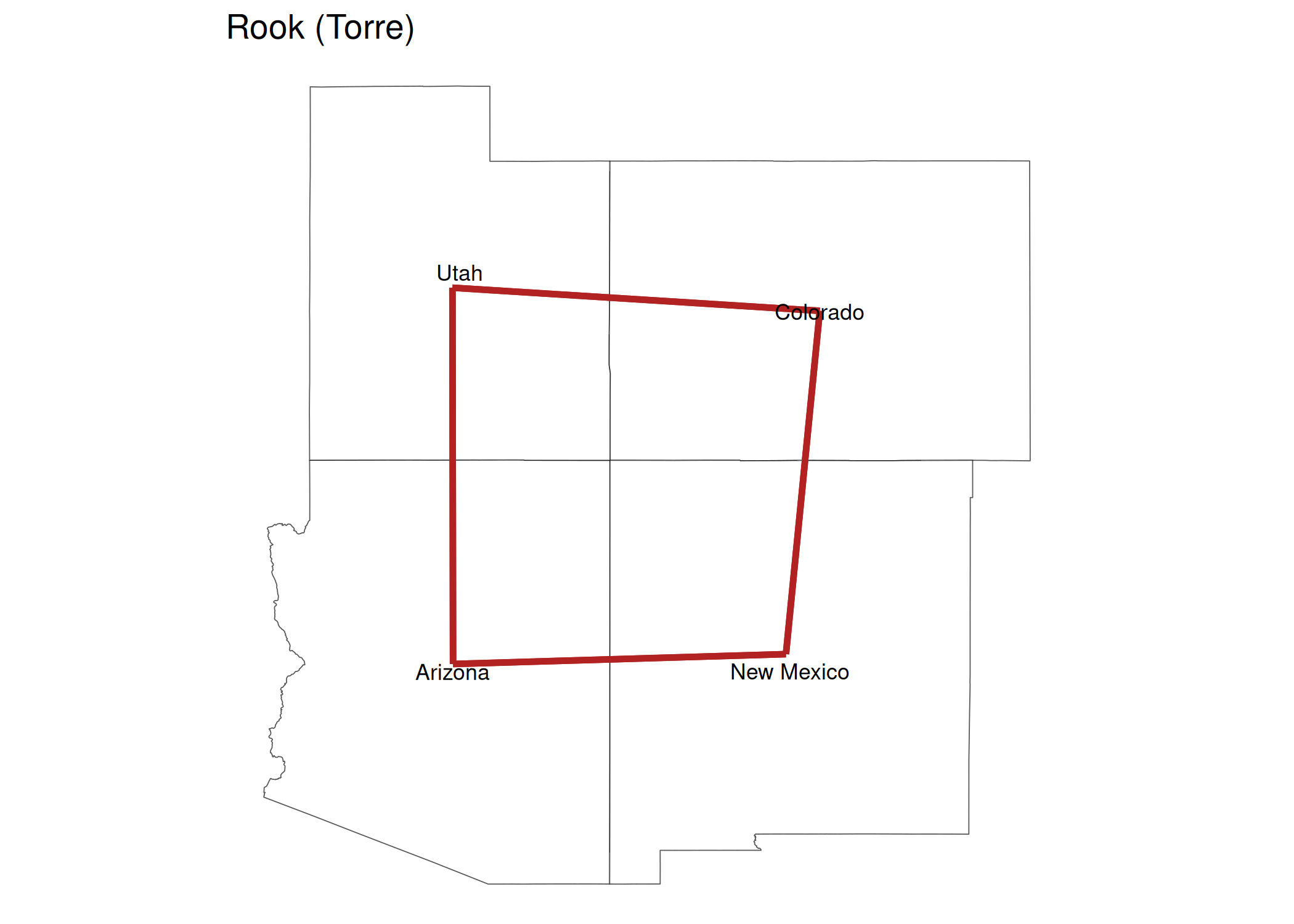
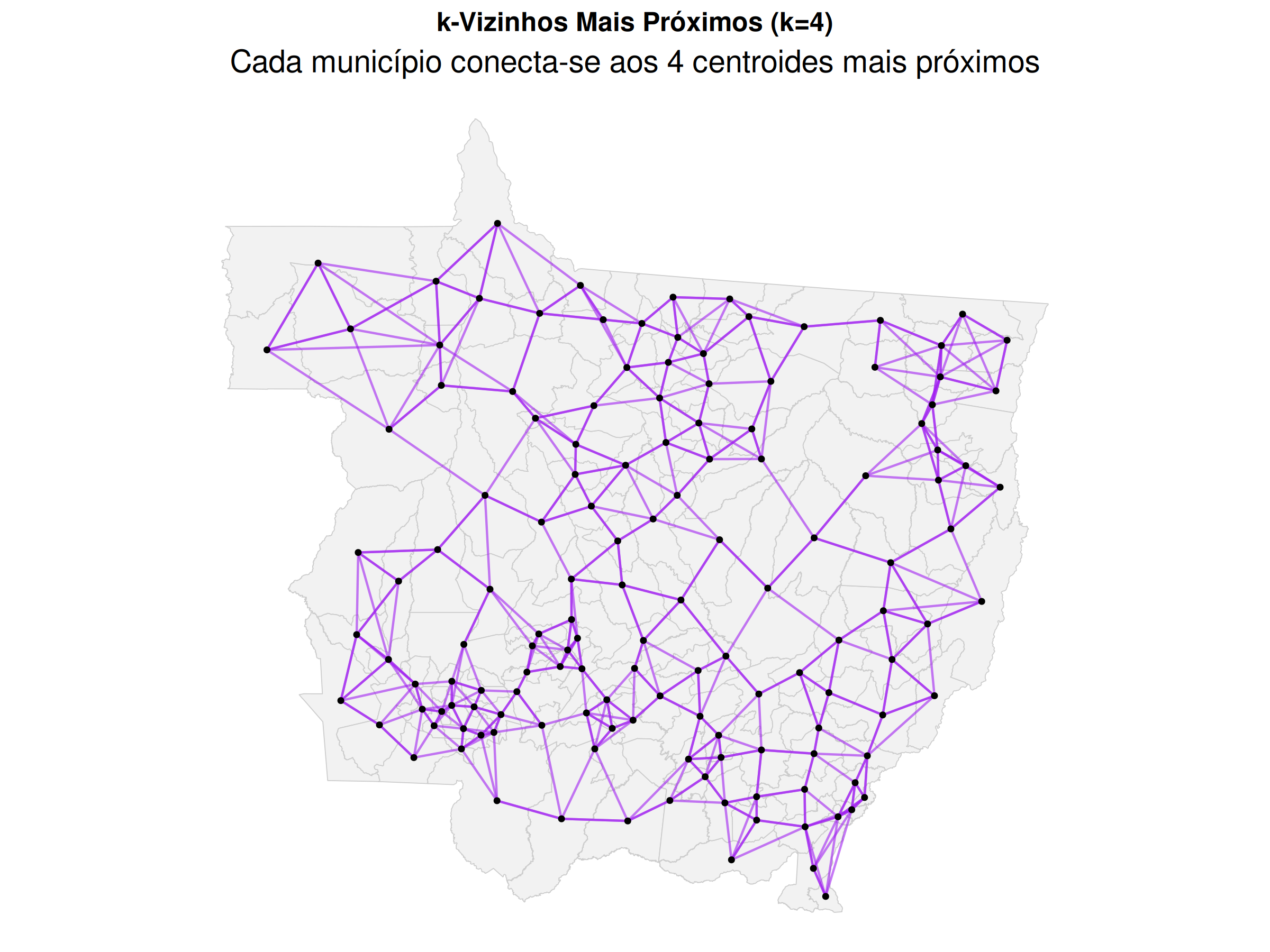
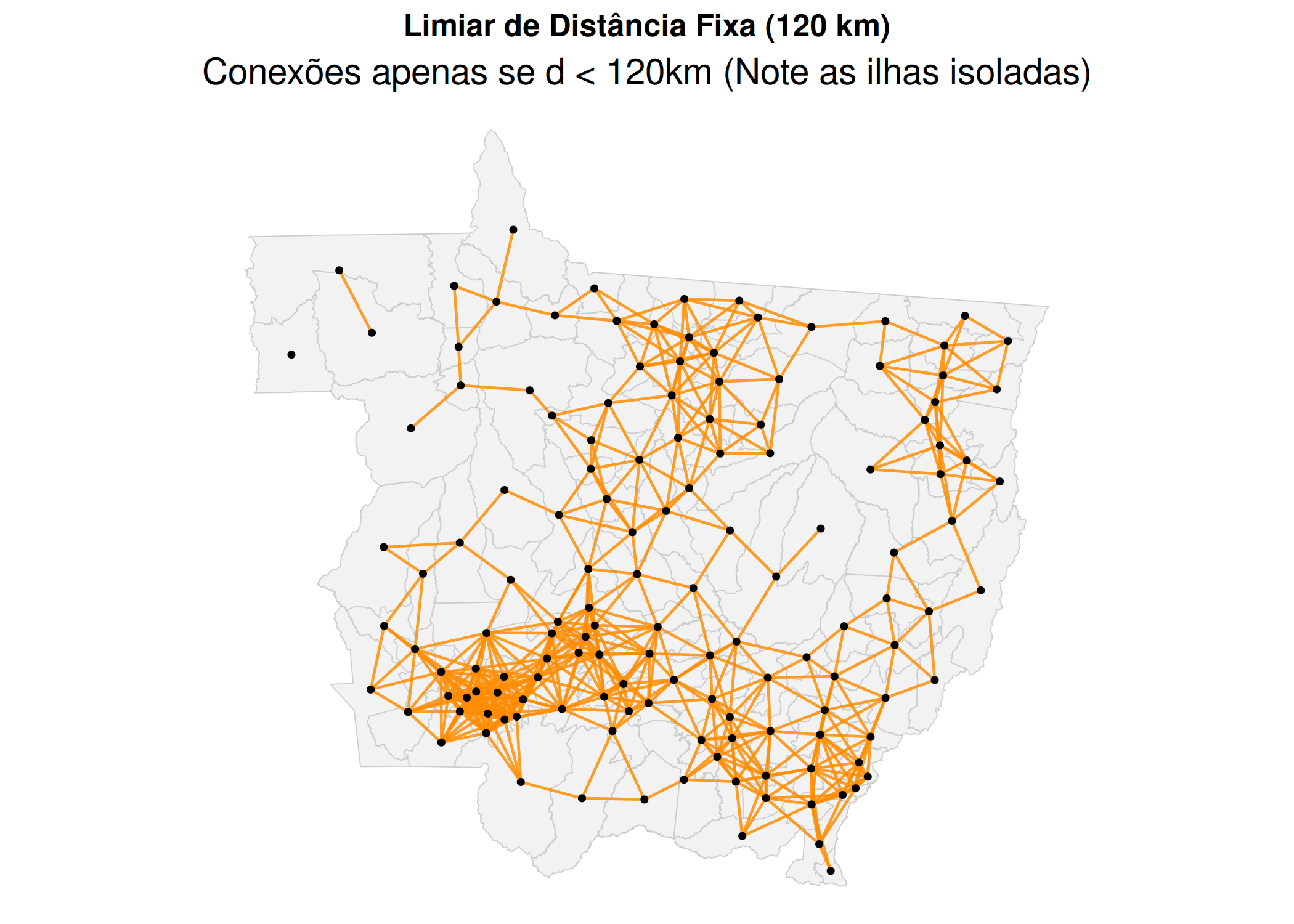
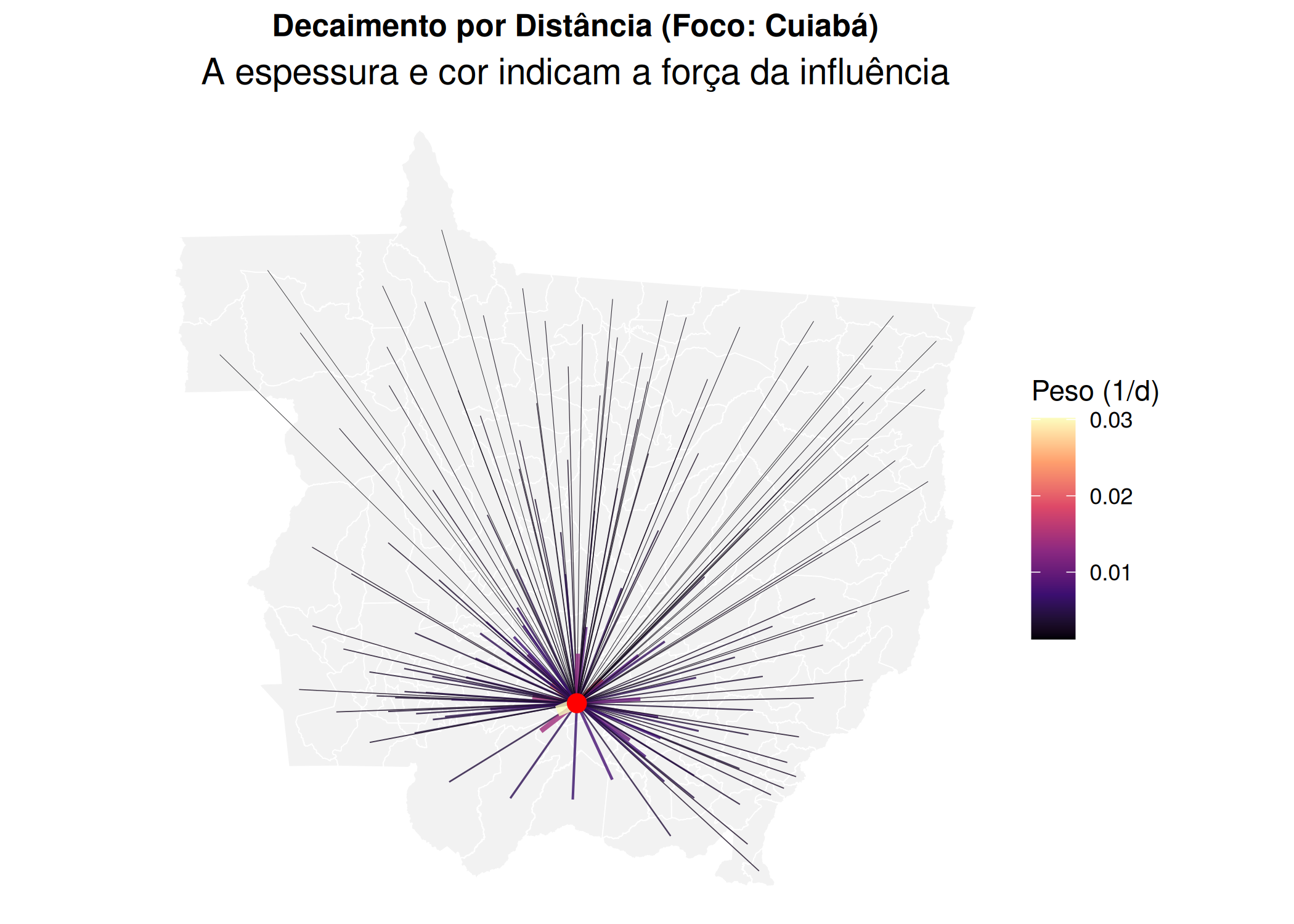
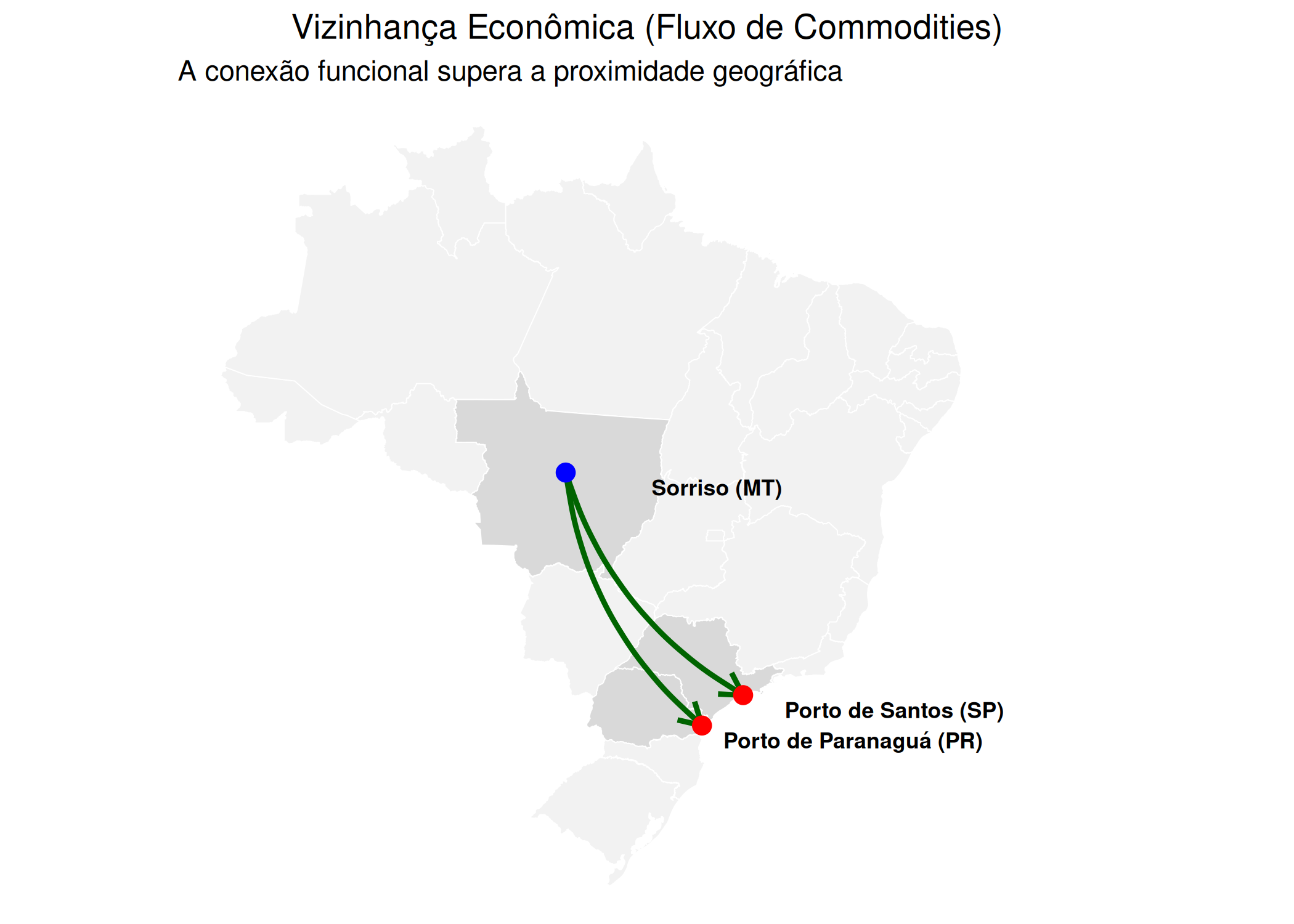
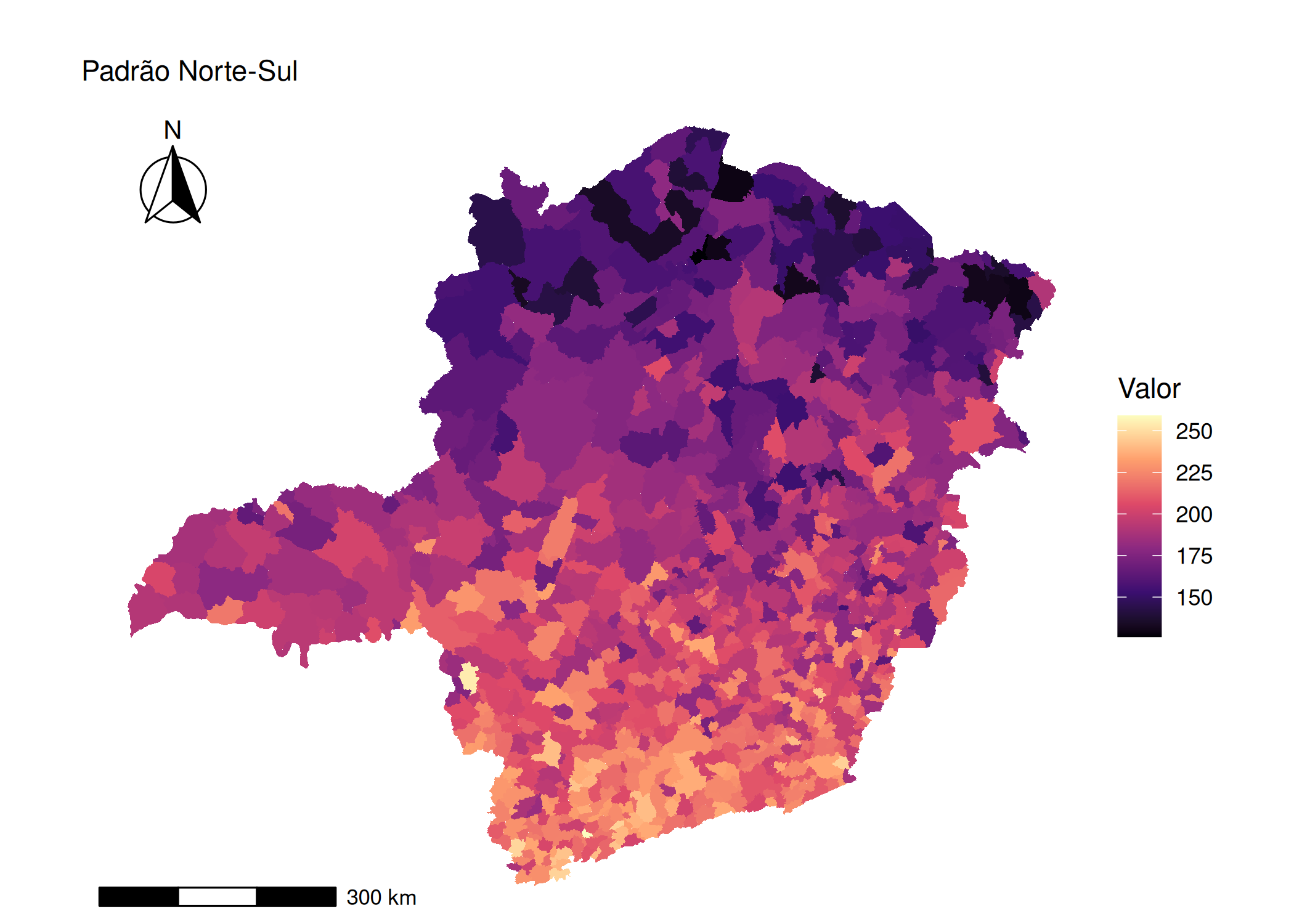
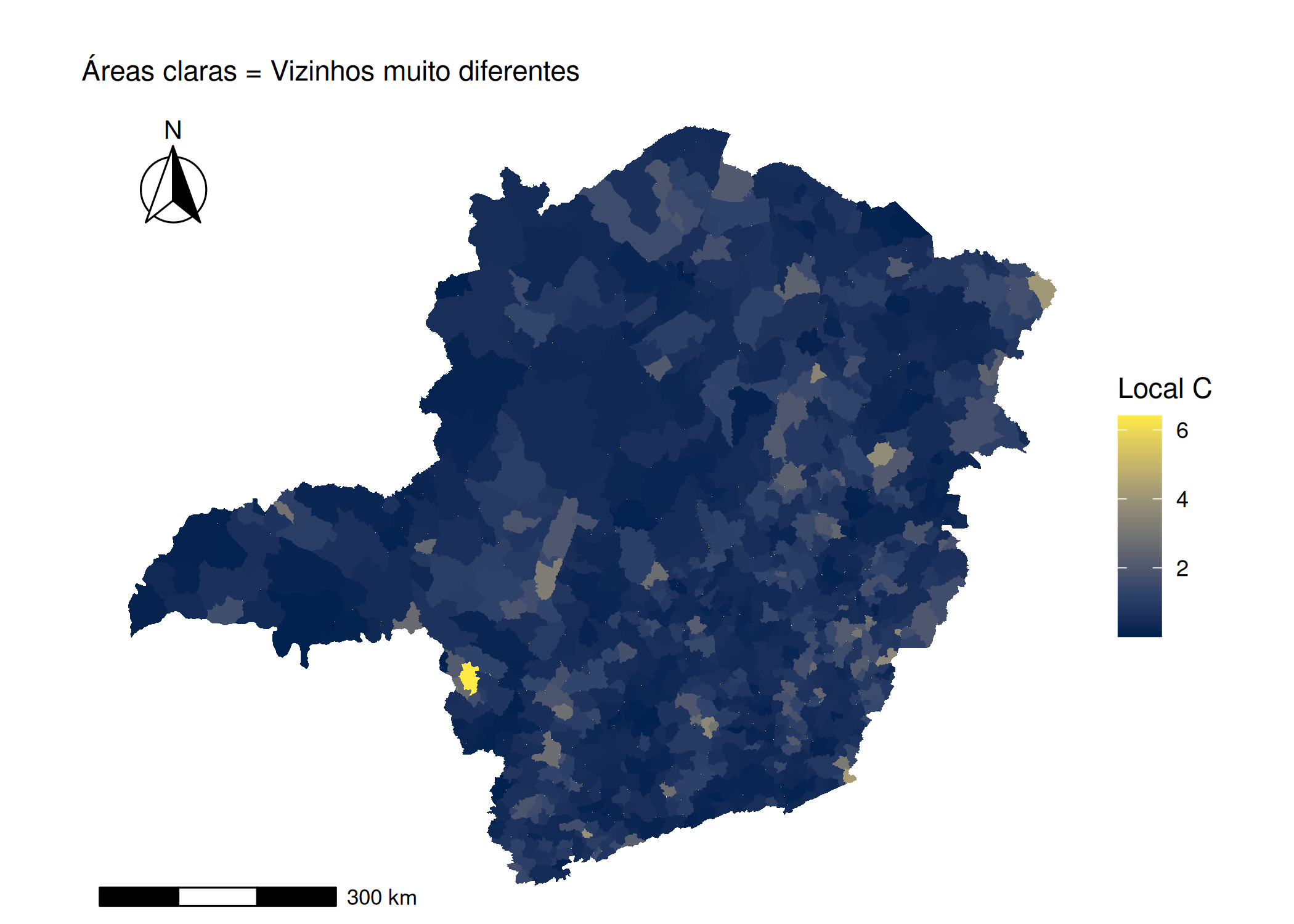
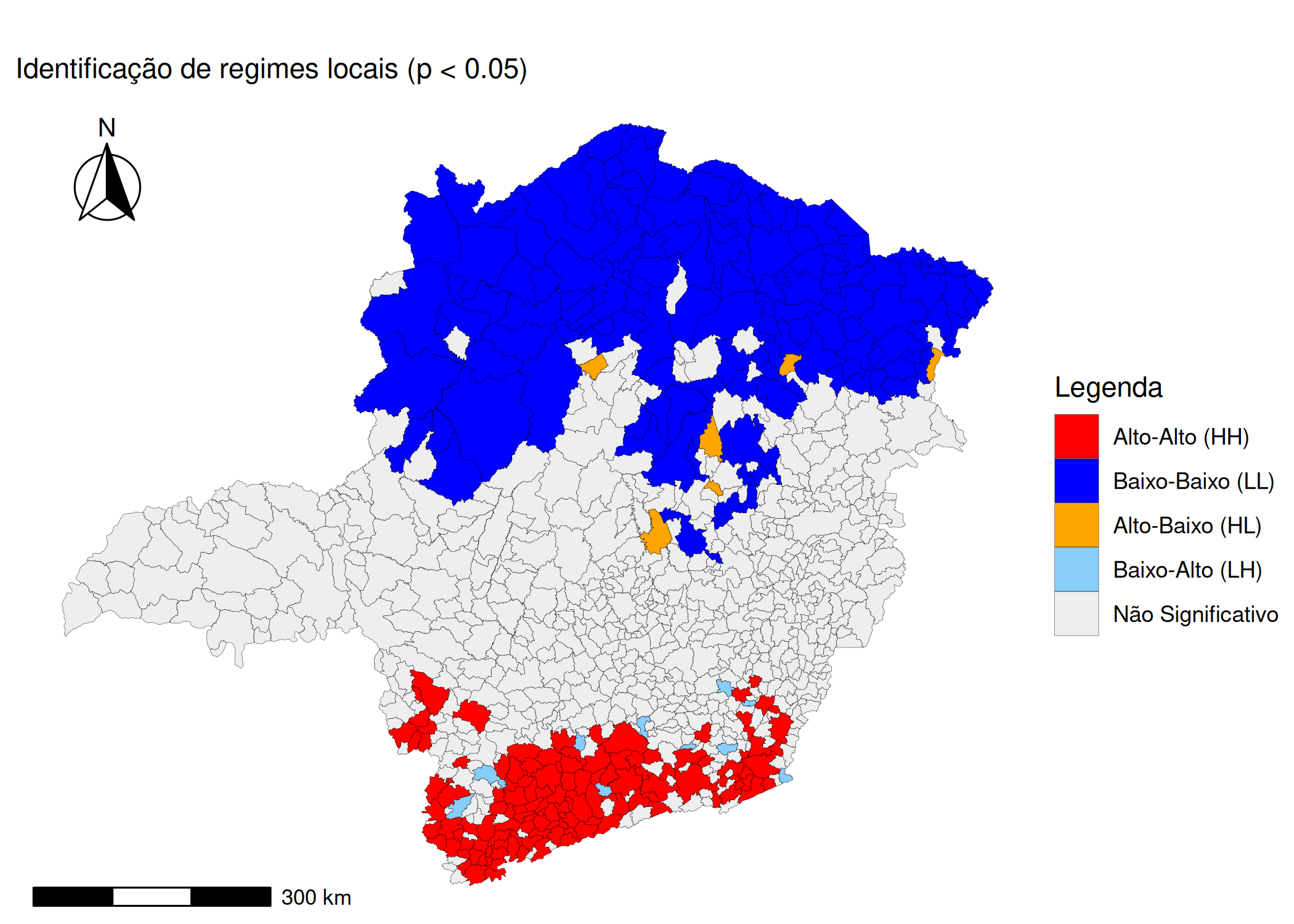
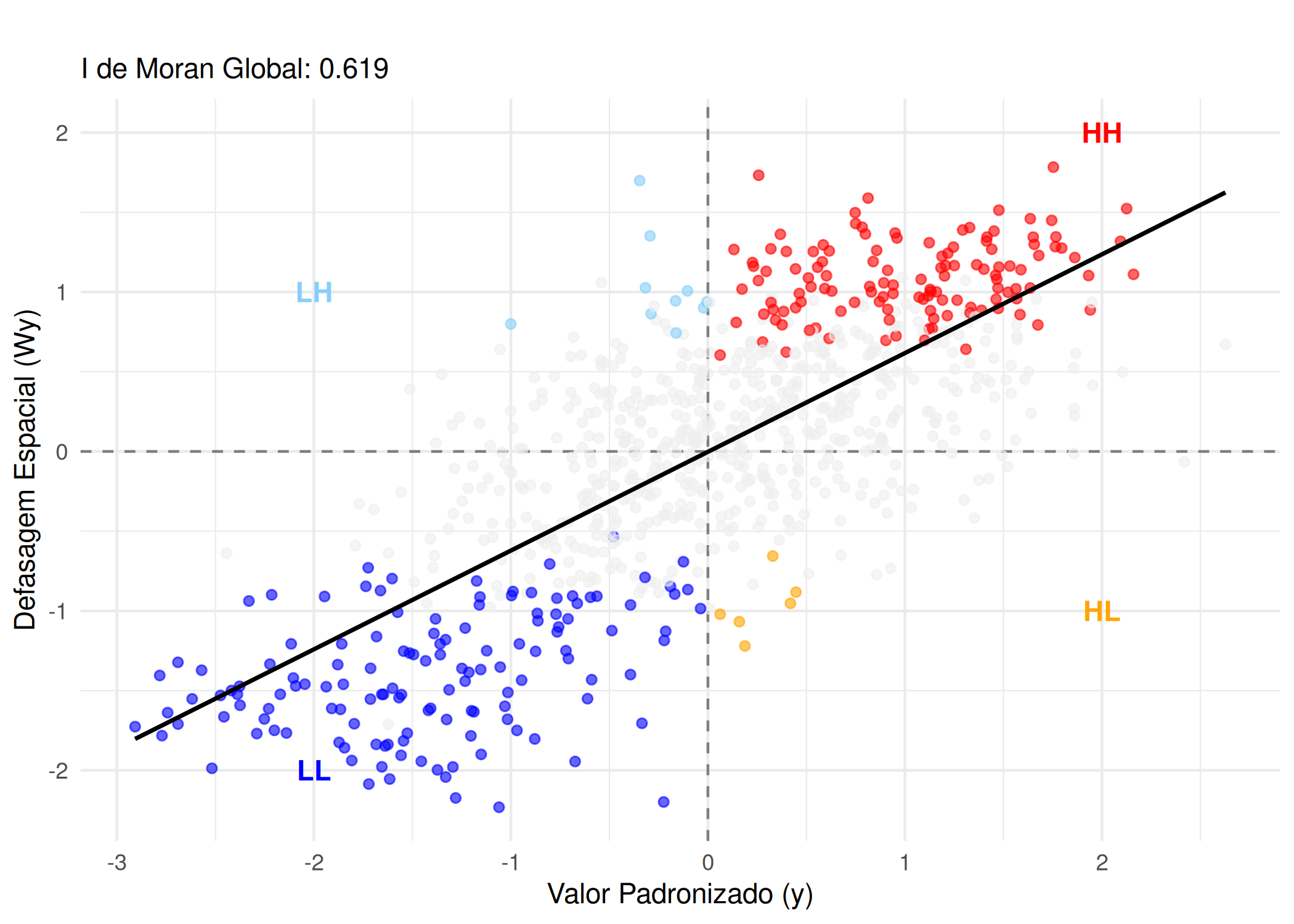
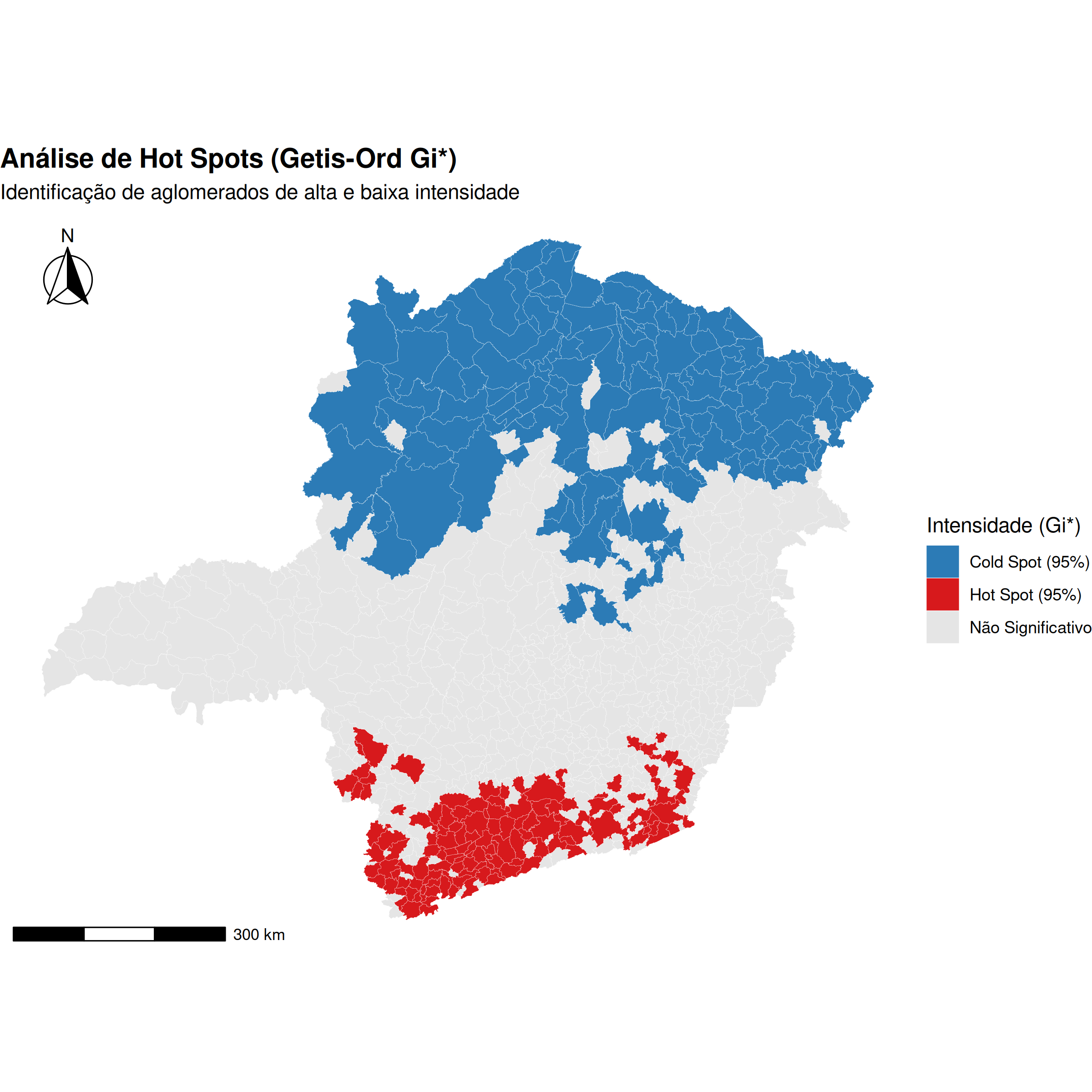
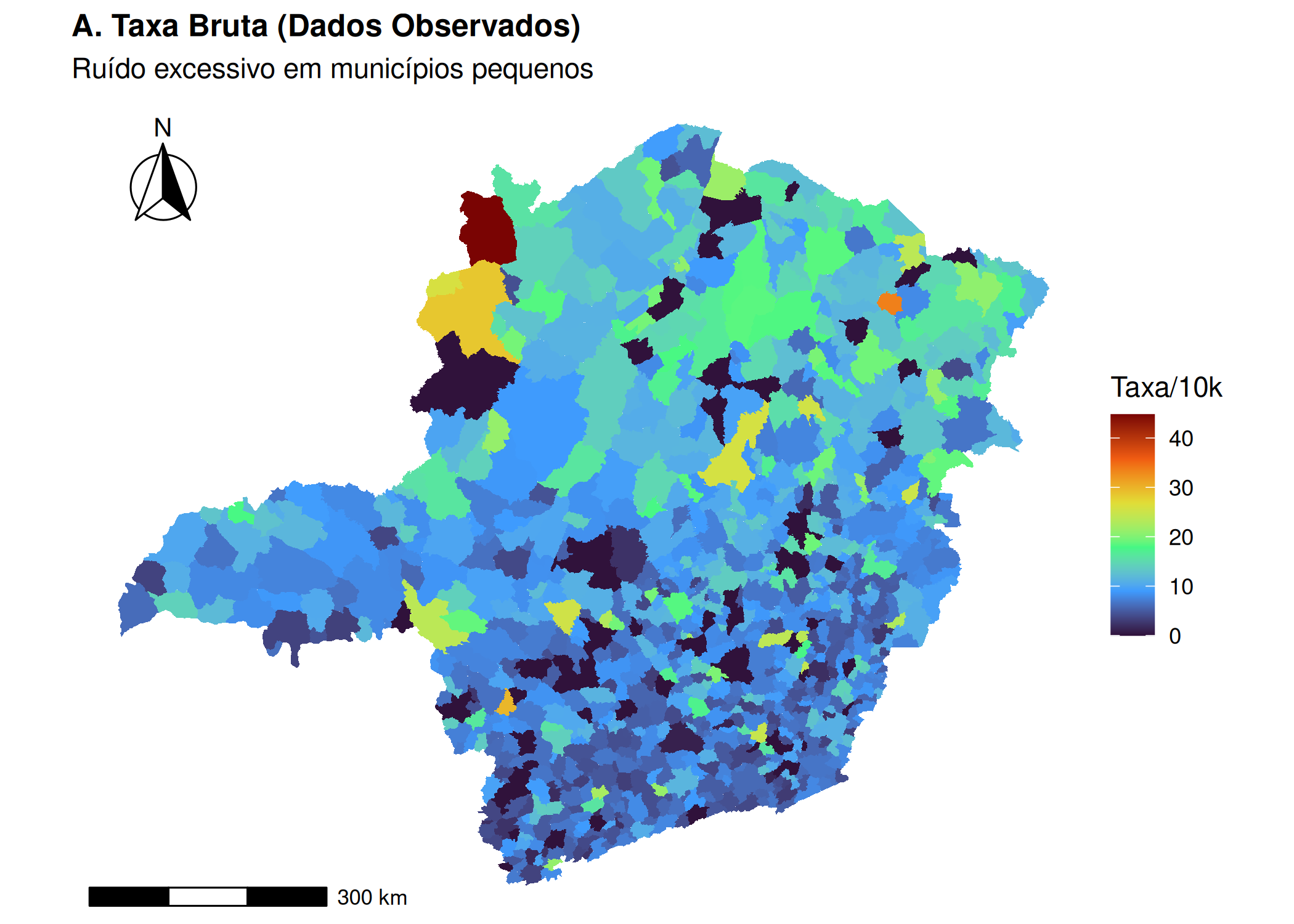
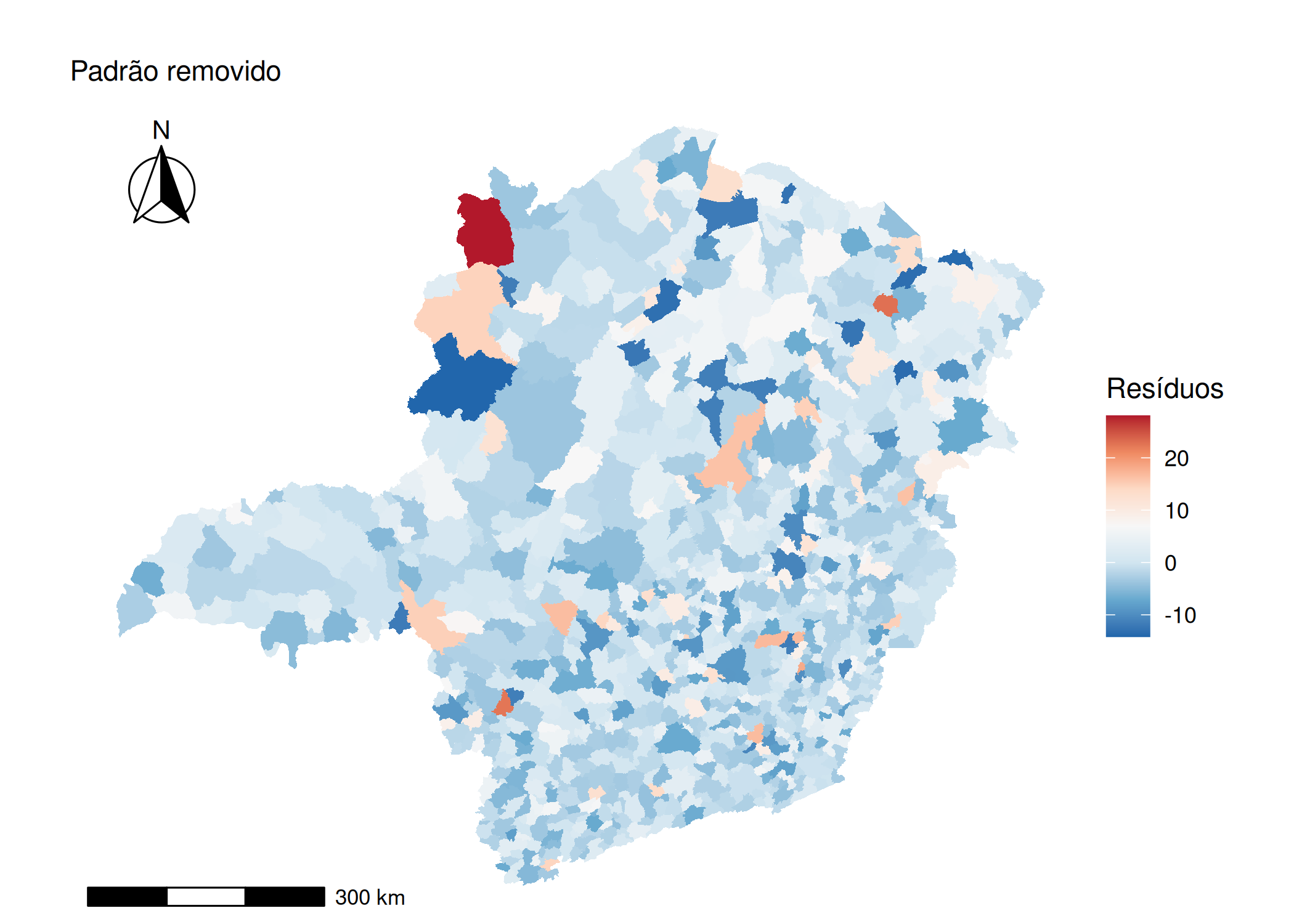
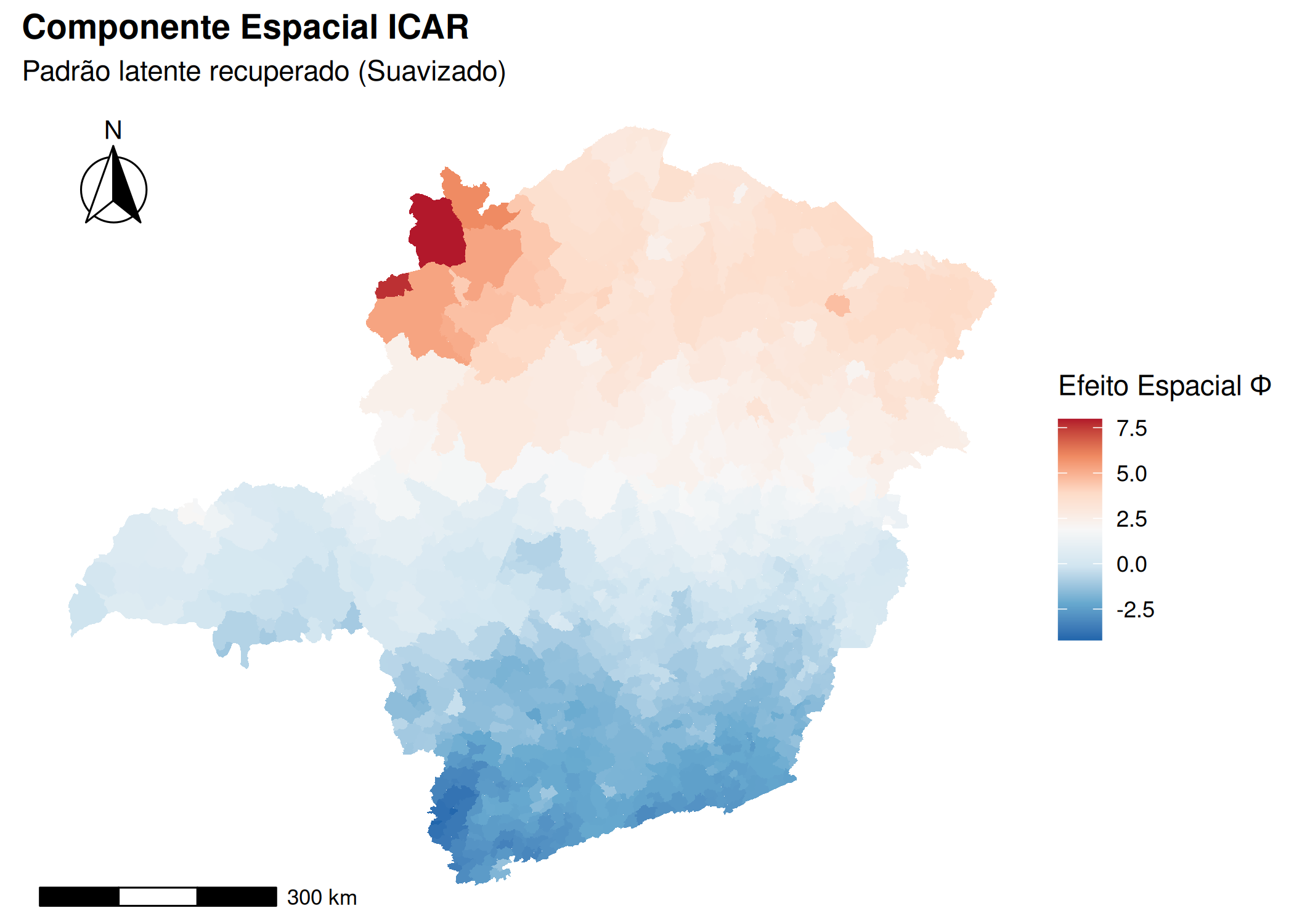
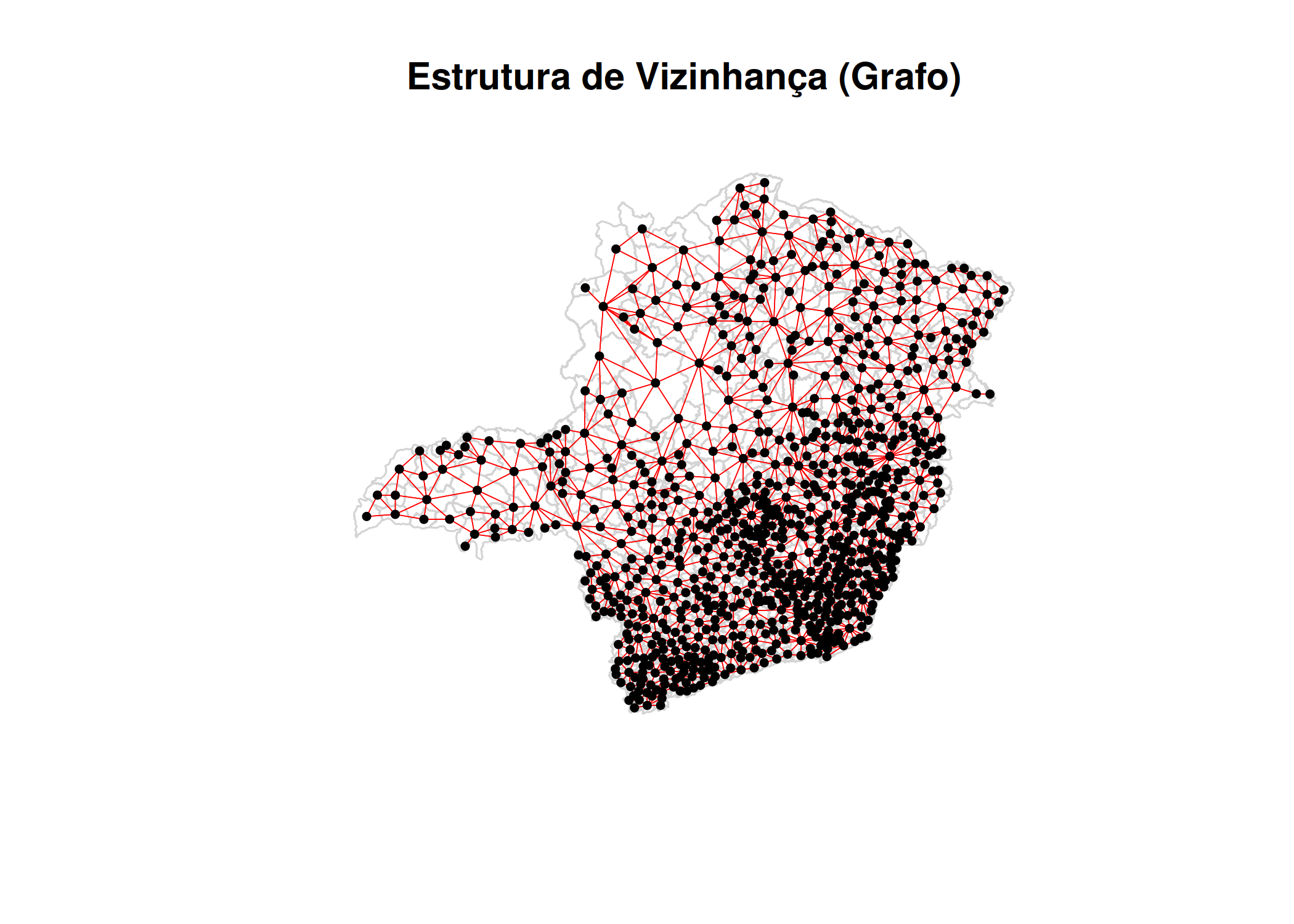
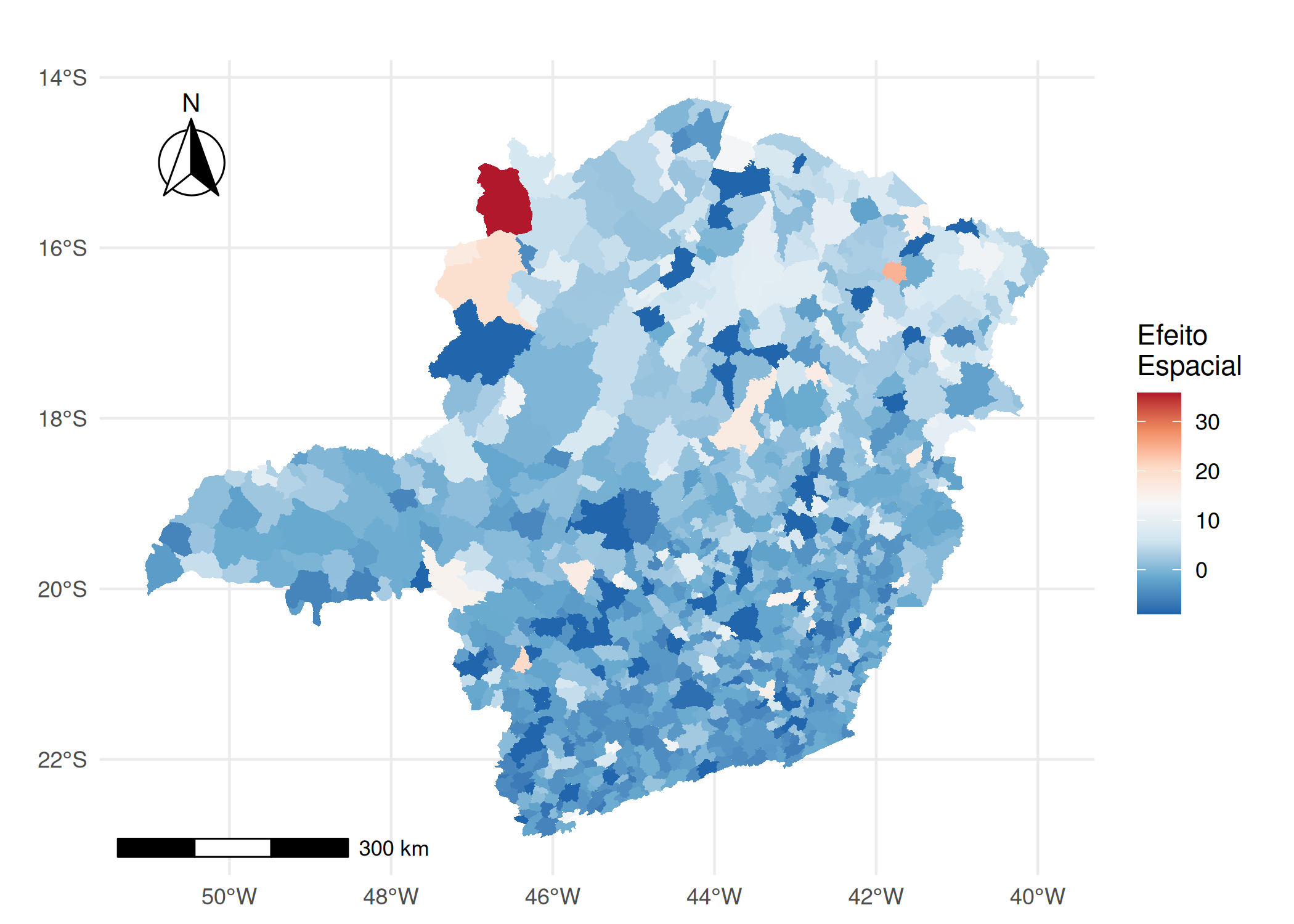
A análise de dados de área (lattice data) foca na modelagem da dependência entre unidades discretas (municípios, setores censitários, grids), sendo fundamental para políticas públicas e inferência causal.
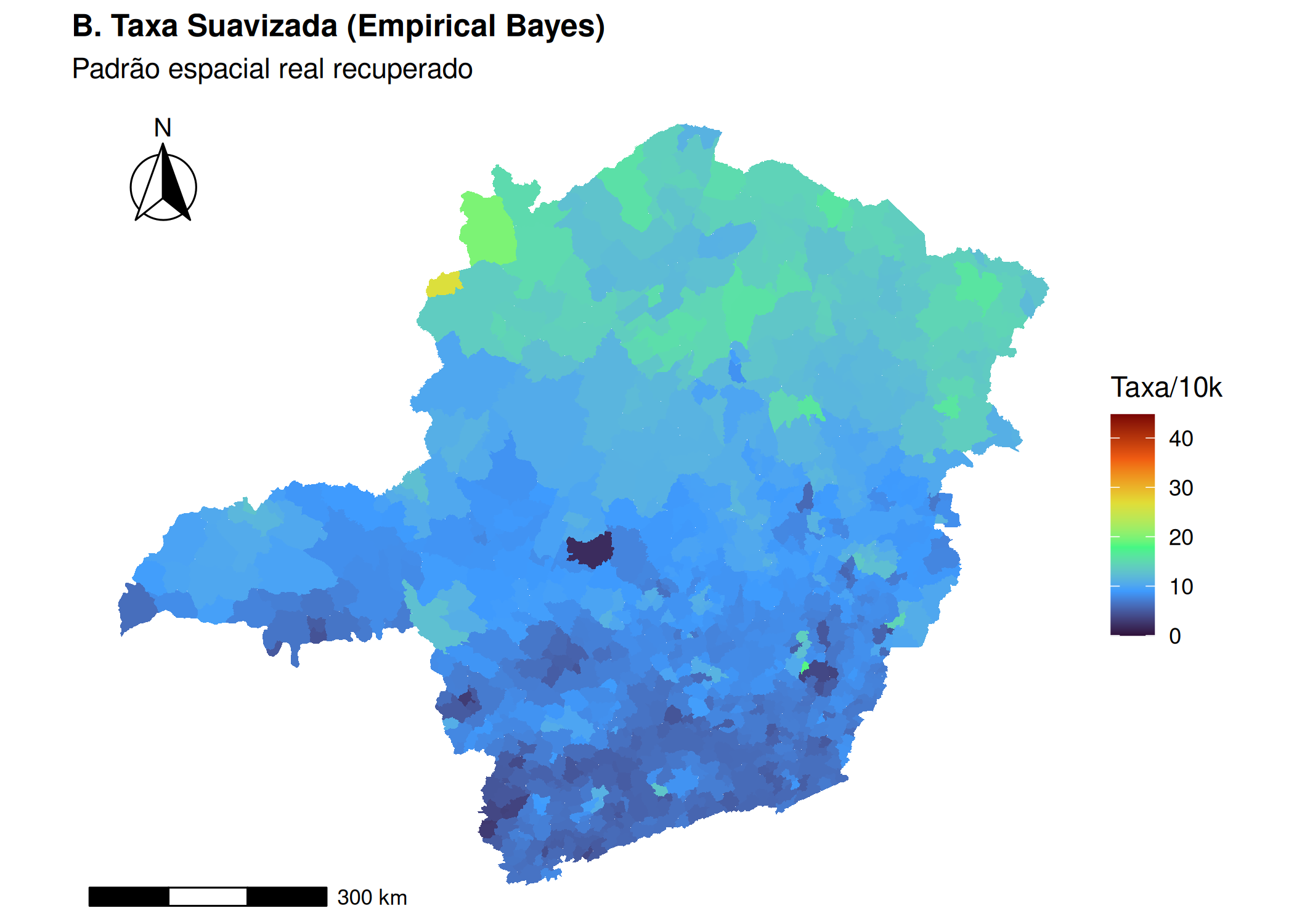
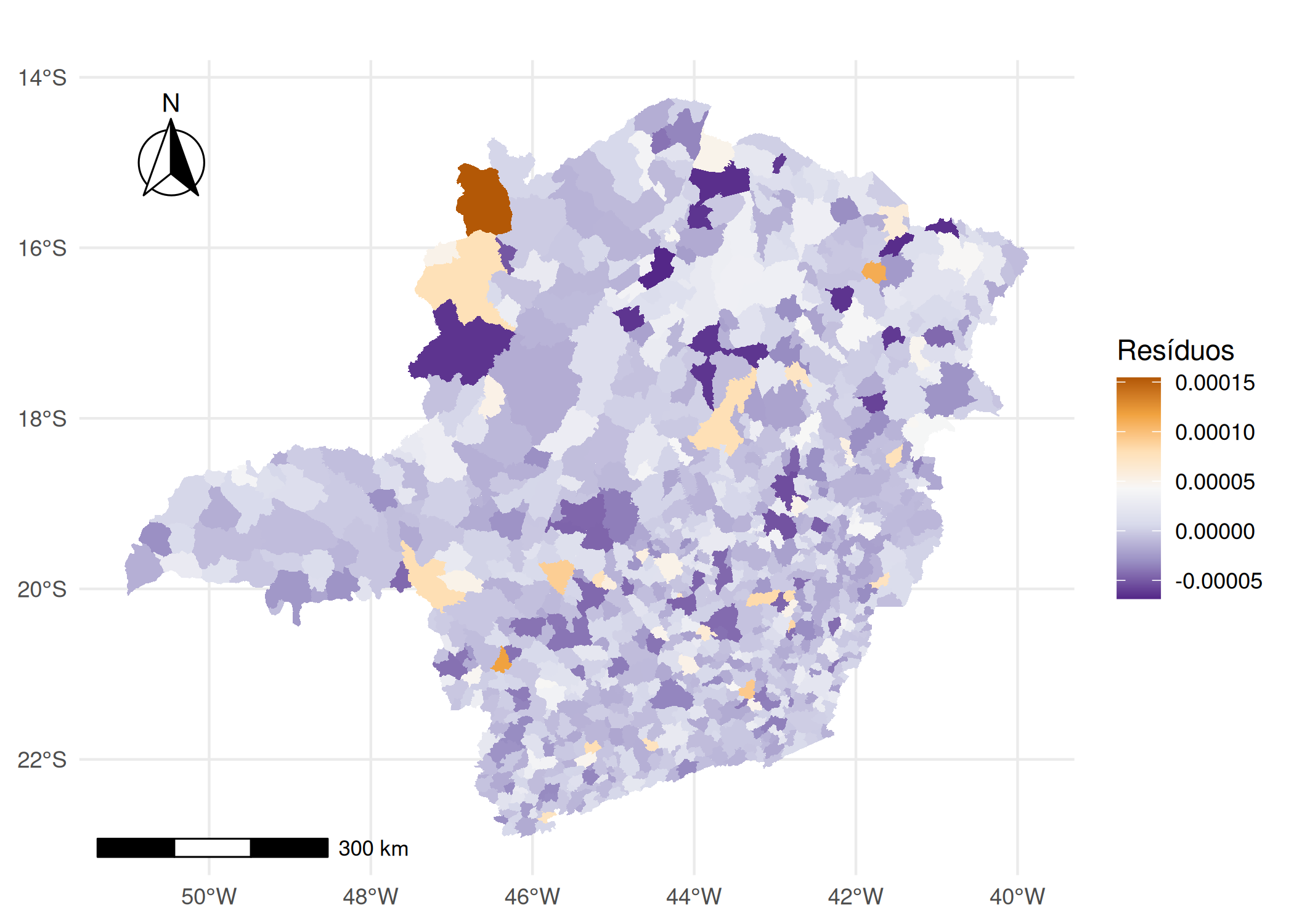
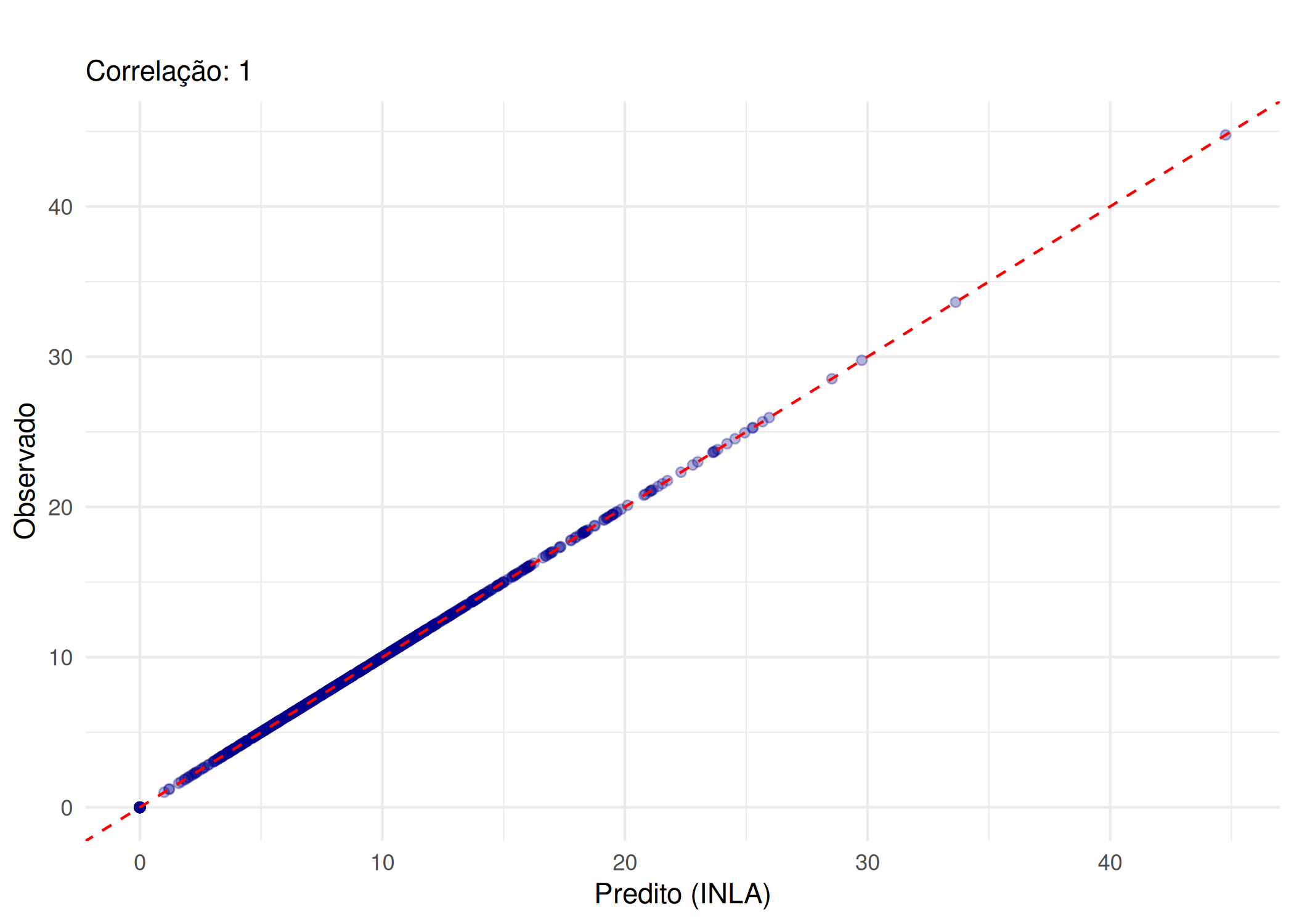
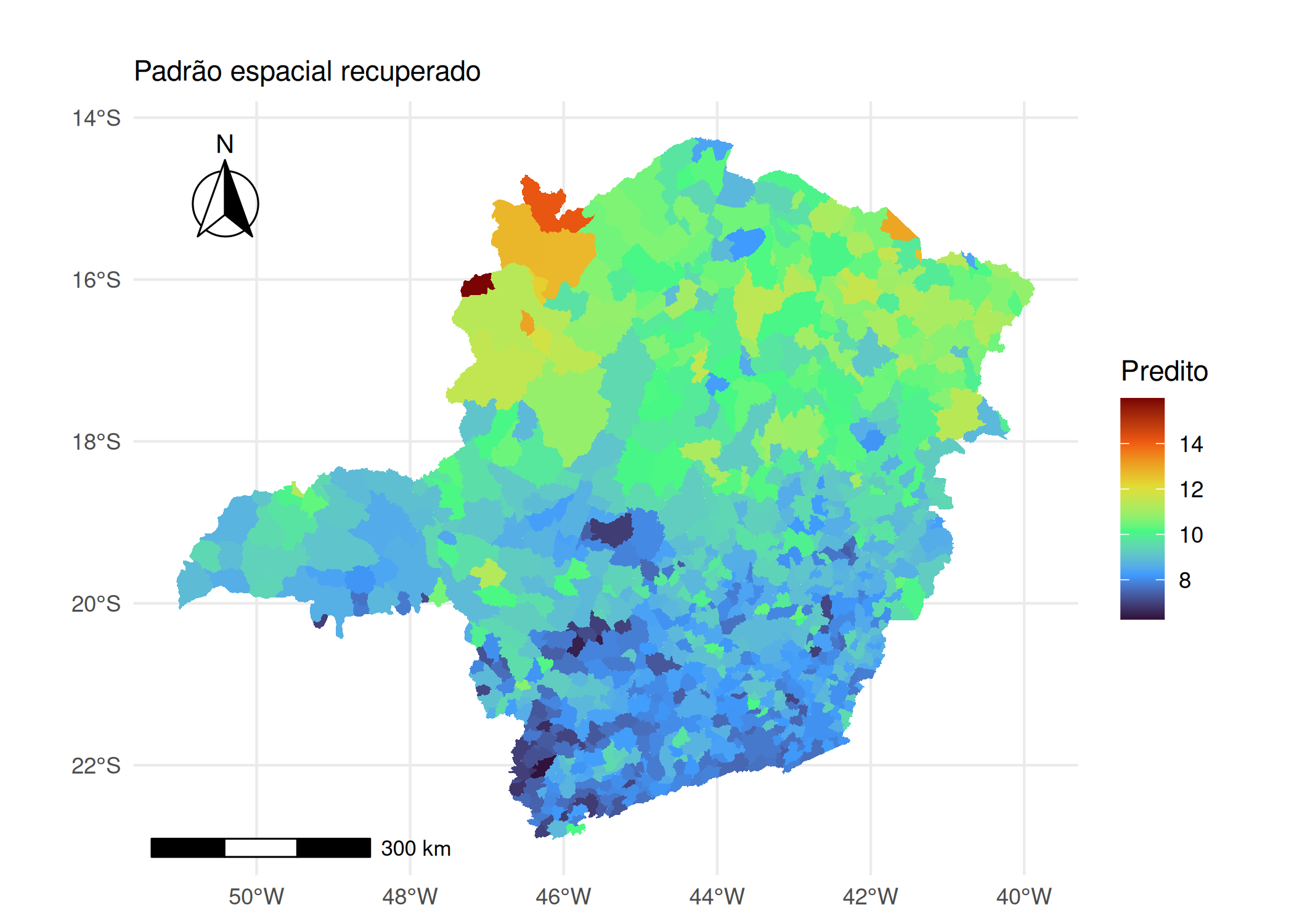
O modelo BYM2 (Besag-York-Mollié reparametrizado) implementado via INLA pode ser usado para estimar riscos relativos de doenças em pequenas áreas, suavizando taxas instáveis decorrentes de populações rarefeitas e quantificando a proporção exata da variância atribuível à estrutura espacial.
Podem ser usados para monitorar a difusão dinâmica de doenças infecciosas (como Dengue ou COVID-19), permitindo identificar padrões de propagação entre municípios vizinhos ao longo do tempo e detectar ondas epidêmicas defasadas.
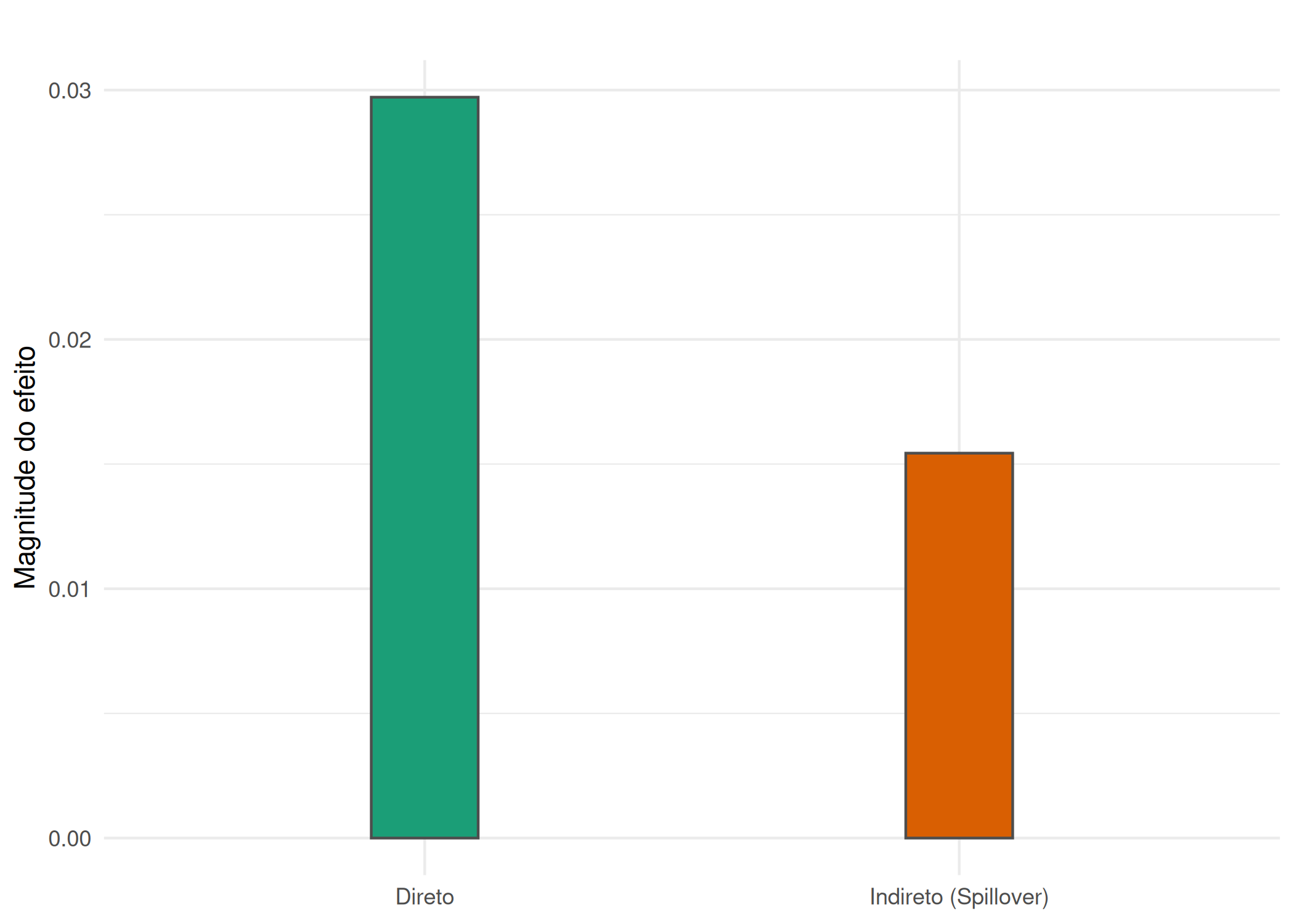
Mensurar efeitos de transbordamento (spillovers) locais, estimando, por exemplo, como o investimento em infraestrutura em um município impacta diretamente o crescimento econômico dos seus vizinhos imediatos, sem as restrições de feedback global.
A Regressão Geograficamente Ponderada Multiescalar (MGWR) pode ser usada para identificar a escala de operação de diferentes determinantes econômicos, revelando, por exemplo, se o impacto da renda sobre o preço da habitação é um processo global (estacionário) enquanto o impacto da segurança pública é estritamente local.
Modelos de regressão espacial para contagens (Poisson ou Binomial Negativa Espacial) podem ser usados para testar teorias de desorganização social em micro-unidades, permitindo associar variáveis socioeconômicas (como desigualdade e densidade) a taxas de criminalidade, controlando rigorosamente pela autocorrelação espacial para evitar falsos positivos.
Modelos autorregressivos condicionais (CAR) podem ser usados para correlacionar a exposição a poluentes atmosféricos com indicadores de privação social, ajustando a análise para fatores de confusão espacial não observados e garantindo inferências válidas sobre iniquidades ambientais.
Anselin, Luc. 1988. “Spatial econometrics: methods and models”. Kluwer Academic Publishers google schola 2: 283–91.
———. 1995. “Local indicators of spatial association—LISA”. Geographical analysis 27 (2): 93–115.
———. 2001. “Spatial Econometrics”. Em A Companion to Theoretical Econometrics, editado por Badi H. Baltagi, 310–30. Oxford: Blackwell Publishing.
———. 2002. “Under the hood issues in the specification and interpretation of spatial regression models”. Agricultural economics 27 (3): 247–67.
———. 2010. “Thirty years of spatial econometrics”. Papers in regional science 89 (1): 3–26.
Banerjee, Sudipto. 2016. “Spatial data analysis”. Annual review of public health 37 (1): 47–60.
Banerjee, Sudipto, Bradley P Carlin, e Alan E Gelfand. 2003. Hierarchical modeling and analysis for spatial data. Chapman; Hall/CRC.
Beron, Kurt J, e Wim PM Vijverberg. 2004. “Probit in a spatial context: a Monte Carlo analysis”. Em Advances in spatial econometrics: methodology, tools and applications, 169–95. Springer.
Besag, Julian. 1974. “Spatial interaction and the statistical analysis of lattice systems”. Journal of the Royal Statistical Society: Series B (Methodological) 36 (2): 192–225.
———. 1975. “Statistical analysis of non-lattice data”. Journal of the Royal Statistical Society Series D: The Statistician 24 (3): 179–95.
Besag, Julian, e Peter J Green. 1993. “Spatial statistics and Bayesian computation”. Journal of the Royal Statistical Society Series B: Statistical Methodology 55 (1): 25–37.
Besag, Julian, e Charles Kooperberg. 1995.
“On Conditional and Intrinsic Autoregression”.
Biometrika 82 (4): 733–46.
https://doi.org/10.2307/2337341.
Besag, Julian, Jeremy York, e Annie Mollié. 1991. “Bayesian image restoration, with two applications in spatial statistics”. Annals of the institute of statistical mathematics 43 (1): 1–20.
Billé, Anna Gloria, e Giuseppe Arbia. 2019. “Spatial limited dependent variable models: A review focused on specification, estimation, and health economics applications”. Journal of Economic Surveys 33 (5): 1531–54.
Billé, Anna Gloria, e Samantha Leorato. 2020. “Partial ML estimation for spatial autoregressive nonlinear probit models with autoregressive disturbances”. Econometric Reviews 39 (5): 437–75.
Blangiardo, Marta, e Michela Cameletti. 2015. Spatial and spatio-temporal Bayesian models with R-INLA. John Wiley & Sons.
Brunsdon, Chris, A Stewart Fotheringham, e Martin E Charlton. 1996. “Geographically weighted regression: a method for exploring spatial nonstationarity”. Geographical analysis 28 (4): 281–98.
Burridge, Peter. 1980. “On the Cliff-Ord test for spatial correlation”. Journal of the Royal Statistical Society: Series B (Methodological) 42 (1): 107–8.
———. 1981. “Testing for a common factor in a spatial autoregression model”. Environment and planning A 13 (7): 795–800.
Calabrese, Raffaella, e Johan A Elkink. 2014. “Estimators of binary spatial autoregressive models: A Monte Carlo study”. Journal of Regional Science 54 (4): 664–87.
Cliff, Andrew David, e J Keith Ord. 1981.
“Spatial processes: models & applications”.
(No Title). https://doi.org/
https://doi.org/10.2307/2530324.
Cressie, Noel. 1993. Statistics for spatial data. John Wiley & Sons.
Cressie, Noel, e Ngai H Chan. 1989. “Spatial modeling of regional variables”. Journal of the American Statistical Association 84 (406): 393–401.
Cressie, Noel, e Matthew T Moores. 2022. “Spatial statistics”. Em Encyclopedia of mathematical geosciences, 1–11. Springer.
da Silva, Anderson R., e A. Stewart Fotheringham. 2016. “The multiple testing issue in geographically weighted regression”. Geographical Analysis 48 (3): 233–47.
da Silva, Anderson R., e Flávio F. Mendes. 2018. “On comparing some algorithms for finding the optimal bandwidth in geographically weighted regression”. Applied Soft Computing 73: 943–57.
Elhorst, J Paul. 2014. “Spatial econometrics: from cross-sectional data to spatial panels”. Springer.
———. 2022. “The dynamic general nesting spatial econometric model for spatial panels with common factors: Further raising the bar”. Review of Regional Research 42 (3): 249–67.
Fleming, Mark M. 2004. “Techniques for estimating spatially dependent discrete choice models”. Em Advances in spatial econometrics: methodology, tools and applications, 145–68. Springer.
Fotheringham, A. Stewart, Wenbai Yang, e Wei Kang. 2017.
“Multiscale Geographically Weighted Regression (MGWR)”.
Annals of the American Association of Geographers 107 (6): 1247–65.
https://doi.org/10.1080/24694452.2017.1352480.
Fotheringham, A. Stewart, Hanchen Yu, Levi John Wolf, Taylor M. Oshan, e Ziqi Li. 2022.
“On the notion of ‘bandwidth’ in geographically weighted regression models of spatially varying processes”.
International Journal of Geographical Information Science 36 (8): 1485–1502.
https://doi.org/10.1080/13658816.2022.2034829.
Gelman, Andrew. 2006. “Prior Distributions for Variance Parameters in Hierarchical Models”. Bayesian Analysis 1 (3): 515–34.
Getis, Arthur. 1995. “Cliff, ad and ord, jk 1973: Spatial autocorrelation. london: Pion”. Progress in Human Geography 19 (2): 245–49.
———. 2010. “Spatial Autocorrelation”. Em Handbook of Applied Spatial Analysis: Software Tools, Methods and Applications, editado por Manfred M. Fischer e Arthur Getis, 255–78. Berlin, Heidelberg: Springer.
Getis, Arthur, e J Keith Ord. 1992. “The analysis of spatial association by use of distance statistics”. Geographical analysis 24 (3): 189–206.
Gollini, Isabella, Binbin Lu, Martin Charlton, Christopher Brunsdon, e Paul Harris. 2015. “GWmodel: an R package for exploring spatial heterogeneity using geographically weighted models”. Journal of statistical software 63: 1–50.
Greene, William H. 2003. Econometric Analysis. 5º ed. Prentice Hall.
Guo, L., Z. Ma, e L. Zhang. 2008. “Comparison of bandwidth selection in application of geographically weighted regression: a case study”. Canadian Journal of Forest Research 38 (9): 2526–34.
Haining, Robert Haining, Stephen Wise, e Jingsheng Ma. 1998. “Exploratory spatial data analysis in a geographic information system environment”. Journal of the Royal Statistical Society Series D: The Statistician 47 (3): 457–69.
Haining, Robert P. 2003. Spatial data analysis: theory and practice. Cambridge university press.
Halleck Vega, Solmaria, e J Paul Elhorst. 2015. “The SLX model”. Journal of Regional Science 55 (3): 339–63.
Harris, Richard, John Moffat, e Victoria Kravtsova. 2011. “In search of ‘W’”. Spatial Economic Analysis 6 (3): 249–70.
Hastie, Trevor, e Robert Tibshirani. 1990. Generalized Additive Models. Monographs on Statistics e Applied Probability. London: Chapman; Hall.
He, Zhanjun, Zhe Wang, Zhiqiang Xie, Lin Wu, e Zhen Chen. 2022.
“Multiscale analysis of the influence of street built environment on crime occurrence using street-view images”.
Computers, Environment and Urban Systems 97: 101865.
https://doi.org/10.1016/j.compenvurbsys.2022.101865.
Held, Leonhard, e Havard Rue. 2010. “Conditional and intrinsic autoregressions”. Handbook of spatial statistics, 201–16.
Hepple, Leslie W. 1979. “Bayesian analysis of the linear model with spatial dependence”. Em Exploratory and explanatory statistical analysis of spatial data, 179–99. Springer.
Hodges, James S, e Brian J Reich. 2010. “Adding spatially-correlated errors can mess up the fixed effect you love”. The American Statistician 64 (4): 325–34.
Hurvich, Clifford M., Jeffrey S. Simonoff, e Chih-Ling Tsai. 1998. “Smoothing Parameter Selection in Nonparametric Regression Using an Improved Akaike Information Criterion”. Journal of the Royal Statistical Society: Series B (Statistical Methodology) 60 (2): 271–93.
Jong, Peter de, C Sprenger, e Frans van Veen. 1984. “On extreme values of Moran’s I and Geary’s c”. Geographical Analysis 16 (1): 17–24.
Keefe, Matthew J., Marcelo A. Ferreira, e Christopher T. Franck. 2018a.
“On the formal specification of sum-zero constrained intrinsic conditional autoregressive models”.
Spatial Statistics 24: 54–65.
https://doi.org/10.1016/j.spasta.2018.02.005.
Keefe, Matthew J., Marco A. R. Ferreira, e Christopher T. Franck. 2019.
“Objective Bayesian Analysis for Gaussian Hierarchical Models with Intrinsic Conditional Autoregressive Priors”.
Bayesian Analysis 14 (1): 181–209.
https://doi.org/10.1214/18-BA1107.
Keefe, Matthew J, Marco AR Ferreira, e Christopher T Franck. 2018b. “On the formal specification of sum-zero constrained intrinsic conditional autoregressive models”. Spatial statistics 24: 54–65.
Keefe, Michael J., Marco A. R. Ferreira, e Christopher T. Franck. 2019.
“Objective Bayesian analysis for Gaussian hierarchical models with intrinsic conditional autoregressive priors”.
Bayesian Analysis 14 (1): 181–209.
https://doi.org/10.1214/18-BA1107.
Kelejian, Harry H, e Ingmar R Prucha. 1998. “A generalized spatial two-stage least squares procedure for estimating a spatial autoregressive model with autoregressive disturbances”. The journal of real estate finance and economics 17 (1): 99–121.
———. 1999. “A generalized moments estimator for the autoregressive parameter in a spatial model”. International economic review 40 (2): 509–33.
———. 2010. “Specification and estimation of spatial autoregressive models with autoregressive and heteroskedastic disturbances”. Journal of econometrics 157 (1): 53–67.
Kelejian, Harry, e Gianfranco Piras. 2017. Spatial econometrics. Academic Press.
Klier, Thomas, e Daniel P McMillen. 2008. “Clustering of auto supplier plants in the United States: generalized method of moments spatial logit for large samples”. Journal of Business & Economic Statistics 26 (4): 460–71.
Koç, Tufan. 2022. “Bandwidth selection in geographically weighted regression models via information complexity criteria”. Journal of Mathematics.
Krainski, Elias, Virgilio Gómez-Rubio, Haakon Bakka, Amanda Lenzi, Daniela Castro-Camilo, Daniel Simpson, Finn Lindgren, e Håvard Rue. 2018. Advanced spatial modeling with stochastic partial differential equations using R and INLA. Chapman; Hall/CRC.
LeSage, James P. 1997. “Bayesian estimation of spatial autoregressive models”. International regional science review 20 (1-2): 113–29.
———. 2000. “Bayesian estimation of limited dependent variable spatial autoregressive models”. Geographical Analysis 32 (1): 19–35.
LeSage, James, e Robert Kelley Pace. 2009. Introduction to spatial econometrics. Chapman; Hall/CRC.
Liesenfeld, Roman, Jean-François Richard, e Jan Vogler. 2013. “Analysis of discrete dependent variable models with spatial correlation”. Economics Working Paper.
Liu, Jun, K. W. Chau, e Zhen Bao. 2023.
“Multiscale spatial analysis of metro usage and its determinants for sustainable urban development in Shenzhen, China”.
Tunnelling and Underground Space Technology.
https://doi.org/10.1016/j.tust.2022.104912.
Lu, Binbin, Martin Charlton, Paul Harris, e A Stewart Fotheringham. 2014. “Geographically weighted regression with a non-Euclidean distance metric: a case study using hedonic house price data”. International Journal of Geographical Information Science 28 (4): 660–81.
Lu, Bo, Yong Ge, Yeqiao Shi, Jing Zheng, e Paul Harris. 2023.
“Uncovering drivers of community-level house price dynamics through multiscale geographically weighted regression: A case study of Wuhan, China”.
Spatial Statistics 53: 100723.
https://doi.org/10.1016/j.spasta.2022.100723.
Mallows, Cohn L. 1995. “More comments on Cp”. Technometrics 37 (4): 362–72.
Mallows, Colin L. 1973.
“Some Comments on \(C_p\)”.
Technometrics 15 (4): 661–75.
https://doi.org/10.1080/00401706.1973.10489103.
Martinetti, Davide, e Ghislain Geniaux. 2017. “Approximate likelihood estimation of spatial probit models”. Regional Science and Urban Economics 64: 30–45.
McMillen, Daniel P. 1992. “Probit with spatial autocorrelation”. Journal of Regional Science 32 (3): 335–48.
Miao, Xin, Fang Fang, Xuening Zhu, e Hansheng Wang. 2025. “Spatial weights matrix selection and model averaging for multivariate spatial autoregressive models”. Econometric Reviews, 1–31.
Moran, Patrick AP. 1950. “Notes on continuous stochastic phenomena”. Biometrika 37 (1/2): 17–23.
Openshaw, Stan. 1984. “The modifiable areal unit problem”. Concepts and techniques in modern geography.
Oshan, Taylor M., James P. Smith, e A. Stewart Fotheringham. 2020.
“Targeting the spatial context of obesity determinants via multiscale geographically weighted regression”.
International Journal of Health Geographics 19 (1): 11.
https://doi.org/10.1186/s12942-020-00204-8.
Paula, Gilberto A. 2013.
“On diagnostics in double generalized linear models”.
Computational Statistics & Data Analysis 68: 44–51.
https://doi.org/10.1016/j.csda.2013.07.003.
———. 2025. Modelos de Regressão e Aplicações. São Paulo: Instituto de Matemática e Estatı́stica, Universidade de São Paulo.
Pereira, Mario Figueira. 2025. “Dealing with High Complexity in Spatio-Temporal Models”. PhD Thesis, València, Spain: Universitat de València.
Pinkse, Joris, e Margaret E Slade. 1998. “Contracting in space: An application of spatial statistics to discrete-choice models”. Journal of Econometrics 85 (1): 125–54.
Reich, Brian J, James S Hodges, e Vesna Zadnik. 2006. “Effects of residual smoothing on the posterior of the fixed effects in disease-mapping models”. Biometrics 62 (4): 1197–1206.
Riebler, Andrea, Sigrunn H Sørbye, Daniel Simpson, e Håvard Rue. 2016. “An intuitive Bayesian spatial model for disease mapping that accounts for scaling”. Statistical methods in medical research 25 (4): 1145–65.
Rigby, Robert A., Mikis D. Stasinopoulos, Gillian Z. Heller, e Frosso De Bastiani. 2019. Distributions for Modeling Location, Scale, and Shape: Using GAMLSS in R. Boca Raton: Chapman; Hall/CRC.
Rue, Havard, e Leonhard Held. 2005. Gaussian Markov random fields: theory and applications. Chapman; Hall/CRC.
Rue, Håvard, e Leonhard Held. 2005. Gaussian Markov Random Fields: Theory and Applications. Chapman & Hall/CRC Monographs on Statistics & Applied Probability. Boca Raton: Chapman; Hall/CRC.
Rue, Håvard, Sara Martino, e Nicolas Chopin. 2009. “Approximate Bayesian inference for latent Gaussian models by using integrated nested Laplace approximations”. Journal of the royal statistical society: Series b (statistical methodology) 71 (2): 319–92.
Rue, Håvard, Andrea Riebler, Sigrunn H Sørbye, Janine B Illian, Daniel P Simpson, e Finn K Lindgren. 2017. “Bayesian computing with INLA: a review”. Annual Review of Statistics and Its Application 4 (1): 395–421.
Sachdeva, Manish, A. Stewart Fotheringham, e Zhen Li. 2022. “Do places have value? Quantifying the intrinsic value of housing neighborhoods using MGWR”. Journal of Housing Research 31 (1): 24–52.
Scalon, João Domingos. 2024. Análise de Dados Espaciais com Aplicações em R. Lavras: Ed. UFLA.
Shareef, Hitham, A. A. Ibrahim, e A. H. Mutlag. 2015. “Lightning search algorithm”. Applied Soft Computing 36: 315–33.
Simpson, Daniel, Håvard Rue, Andrea Riebler, Thiago G Martins, e Sigrunn H Sørbye. 2017. “Penalising model component complexity: A principled, practical approach to constructing priors”.
Sørbye, Sigrunn Holbek, e Håvard Rue. 2017. “Penalised complexity priors for stationary autoregressive processes”. Journal of Time Series Analysis 38 (6): 923–35.
Sørbye, Sigrunn H., e Håvard Rue. 2014.
“Scaling intrinsic Gaussian Markov random field priors in spatial modelling”.
Spatial Statistics 8: 39–51.
https://doi.org/10.1016/j.spasta.2013.06.004.
Stasinopoulos, Mikis D., Thomas Kneib, Nadja Klein, Andreas Mayr, e Gillian Z. Heller. 2024. Generalized Additive Models for Location, Scale and Shape: A Distributional Regression Approach, with Applications. Vol. 56. Cambridge: Cambridge University Press.
Stasinopoulos, Mikis D., Robert A. Rigby, Gillian Z. Heller, Vlasios Voudouris, e Frosso De Bastiani. 2017. Flexible Regression and Smoothing: Using GAMLSS in R. Chapman & Hall/CRC Texts em Statistical Science. Boca Raton: CRC Press.
Tiefelsdorf, Michael. 2000. Modelling spatial processes: the identification and analysis of spatial relationships in regression residuals by means of Moran’s I. Springer.
Tobias, Justin L. 2024. “A Note on the Cowles-EM Algorithm for Bayesian Ordinal Probit Models”. Research in Statistics 3 (1): 2476409.
Ver Hoef, Jay M, Ephraim M Hanks, e Mevin B Hooten. 2018. “On the relationship between conditional (CAR) and simultaneous (SAR) autoregressive models”. Spatial statistics 25: 68–85.
Wall, Melanie M. 2004. “A close look at the spatial structure implied by the CAR and SAR models”. Journal of statistical planning and inference 121 (2): 311–24.
Wang, Xiaokun, e Kara M Kockelman. 2009. “Baysian inference for ordered response data with a dynamic spatial-ordered probit model”. Journal of Regional Science 49 (5): 877–913.
Wheeler, David, e Michael Tiefelsdorf. 2005.
“Multicollinearity and correlation among local regression coefficients in geographically weighted regression”.
Journal of Geographical Systems 7 (2): 161–87.
https://doi.org/10.1007/s10109-005-0155-6.
Whittle, Peter. 1954. “On stationary processes in the plane”. Biometrika, 434–49.
Wilhelm, Stefan, e Miguel Godinho de Matos. 2013. “Estimating spatial probit models in R”.
Wu, Chao, Fu Ren, Wei Hu, e Qingyun Du. 2019. “Multiscale geographically and temporally weighted regression: exploring the spatiotemporal determinants of housing prices”. International Journal of Geographical Information Science 33 (3): 489–511.
Yang, Wenbai, A. Stewart Fotheringham, e Paul Harris. 2011. “An Extension of Geographically Weighted Regression with Flexible Bandwidths”. Em Proceedings of an International Conference on Spatial Analysis and Modelling. St Andrews, Scotland, UK.
Yang, Wenbo. 2014. “An extension of geographically weighted regression with flexible bandwidths”. Tese de doutorado, University of St Andrews.
Yu, Hanchen, A. Stewart Fotheringham, Zhen Li, Taylor M. Oshan, Wei Kang, e Levi J. Wolf. 2020. “Inference in multiscale geographically weighted regression”. Geographical Analysis 52 (1): 87–106.
Yu, Huili, A. Stewart Fotheringham, Zhenlong Li, Taylor M. Oshan, e Levi J. Wolf. 2020.
“On the measurement of bias in geographically weighted regression models”.
Spatial Statistics 38: 100453.
https://doi.org/10.1016/j.spasta.2020.100453.
Zhang, Xinyu, e Jihai Yu. 2018. “Spatial weights matrix selection and model averaging for spatial autoregressive models”. Journal of Econometrics 203 (1): 1–18.